
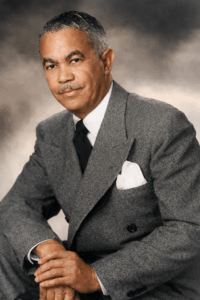
Paul Williams Architect Style and Signature Details
Paul Williams’ residential designs of Beverly Hills Homes are recognizable once you know what to look for. His homes feel elegant without being flashy. The proportions are right, the layouts make sense, and the details hold up decade after decade.
You’ll often see:
-
Classic Colonial and Traditional styles, sometimes with subtle Mediterranean influence
-
Strong symmetry and enduring curb appeal
-
Floor plans with natural flow between public and private spaces
-
Timeless details—crown molding, archways, and French doors
-
Thoughtful window placement that fills rooms with natural light
-
Gracious entry halls that set the tone immediately
What continues to impress me, after walking through dozens of these properties over the years, is how well they still work for modern living. Kitchens connect naturally to dining and living areas. Bedroom wings provide privacy. Indoor and outdoor spaces feel seamless.
That’s why buyers continue to pursue Paul Williams homes—they’re not just beautiful, they’re livable and classic.
Notable Paul Williams Homes in Beverly Hills
Over the years, I’ve come across many documented Williams-designed homes throughout Beverly Hills, including:
Beverly Hills Flats & Nearby
-
707 N Palm Drive — Christian & Marjorie Hartke House (1930)
-
708 N Arden Drive — August & Katherine Sensenbrenner House (1933)
-
626 N Arden Drive (1930)
-
136 S Wetherly Drive — Greta L. Scott Ritterhoff House (1933)
-
1017 Ridgedale Drive — James M. Roberts House (1933)
-
719 N Alpine Drive — James H. & Frances Meriwether renovation (1936)
-
1715 Ambassador Avenue — William S. Miles House (1930)
Trousdale Estates
-
1070 N Hillcrest Road — Mid-century estate attributed to Williams’ later period
These Paul Williams homes are rare, and when they come to market, informed buyers move quickly.
The Lucille Ball & Desi Arnaz Connection
One of the most well-known Paul Williams stories in Beverly Hills involves Lucille Ball and Desi Arnaz. Williams designed multiple homes for the couple, including their primary Beverly Hills residence at the northeast corner of Roxbury Drive and Lexington Road. I used to wax their cars at their home! So I have been there.
The Colonial-style home became Lucille Ball’s longtime residence and remains one of the most recognizable examples of Williams’ residential work. He also designed their early Desilu Ranch in Chatsworth and later desert retreat commissions—proof of his ability to adapt to different settings while maintaining perfect balance and livability.
The Beverly Hills Hotel: Irony and Legacy
Paul Williams’ influence extended beyond private estates. In the 1940s, he was commissioned to remodel and expand the Beverly Hills Hotel, one of Los Angeles’ most iconic landmarks. His work included the Crescent Wing, the grand entrance, poolside cabanas, and major redesigns of the Polo Lounge and Fountain Coffee Room.
The irony is impossible to ignore: while shaping one of the most glamorous hotels in the world, Williams was not allowed to stay there or fully enjoy its amenities because of his race. He famously learned to draw upside down so he could sketch designs for clients seated across from him—an adaptation to the realities of the era.
Despite those barriers, his work helped define the visual identity of Beverly Hills and Los Angeles. That legacy is still standing.
Why Paul Williams Homes Are Still in Demand
There’s a reason buyers gravitate toward Paul Williams homes generation after generation. They offer something increasingly rare: timeless architecture paired with true livability.
The craftsmanship—plasterwork, hardwood floors, ceiling heights, and proportions—is difficult to replicate today. Even after thoughtful renovations, the best homes retain their original character and continue to stand apart from trend-driven construction.
Preservation vs. Modernization
One question I hear often: How much should you update a Paul Williams home?
My answer is simple—respect the bones.
The best renovations preserve the façade, proportions, and signature details while updating kitchens, baths, and systems for modern living. You can modernize without erasing what makes the home special. The worst renovations try to turn a classic Colonial into something trendy. It rarely works.
Buying or Selling a Paul Williams Home
Paul Williams properties deserve a different approach.
When I represent sellers, I don’t just talk about square footage—I tell the story. When I represent buyers, I make sure they understand what they’re acquiring: a piece of Beverly Hills history created by one of the most talented architects Los Angeles has ever known.
Paul Revere Williams is one of my favorite architects. I truly wish I’d had the opportunity to meet him in person. He was extraordinarily gifted, immensely talented, and, by every account, a complete class act—both in his work and in the way he carried himself.
If you’re considering buying or selling Paul Williams homes, or you simply want an informed opinion on a specific property, I’m always happy to talk architecture.
Work with a trusted local, Marty Halfon, Beverly Hills Real Estate Agent at Rodeo Realty in Beverly Hills.
LAX’s iconic Theme Building
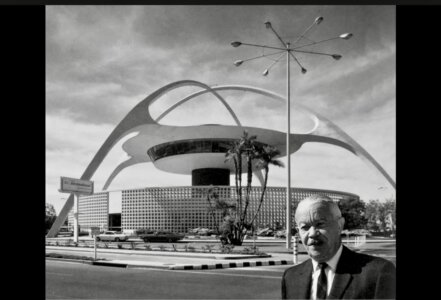
Beyond residential architecture, Paul Revere Williams also left a lasting mark on Los Angeles through important commercial and civic projects. His work helped shape the city’s public identity, including department stores, office buildings, and hospitality landmarks. He is often associated with LAX’s iconic Theme Building, a Jet Age symbol of Los Angeles created as part of a collaborative effort with leading architects of the era. Even in large-scale projects, Williams brought the same sense of proportion, clarity, and timeless design found in his residential work.
Look forward to hearing from you.
Marty Halfon | Rodeo Realty | Beverly Hills
Beverly Hills resident since 1962
Your local real estate expert